

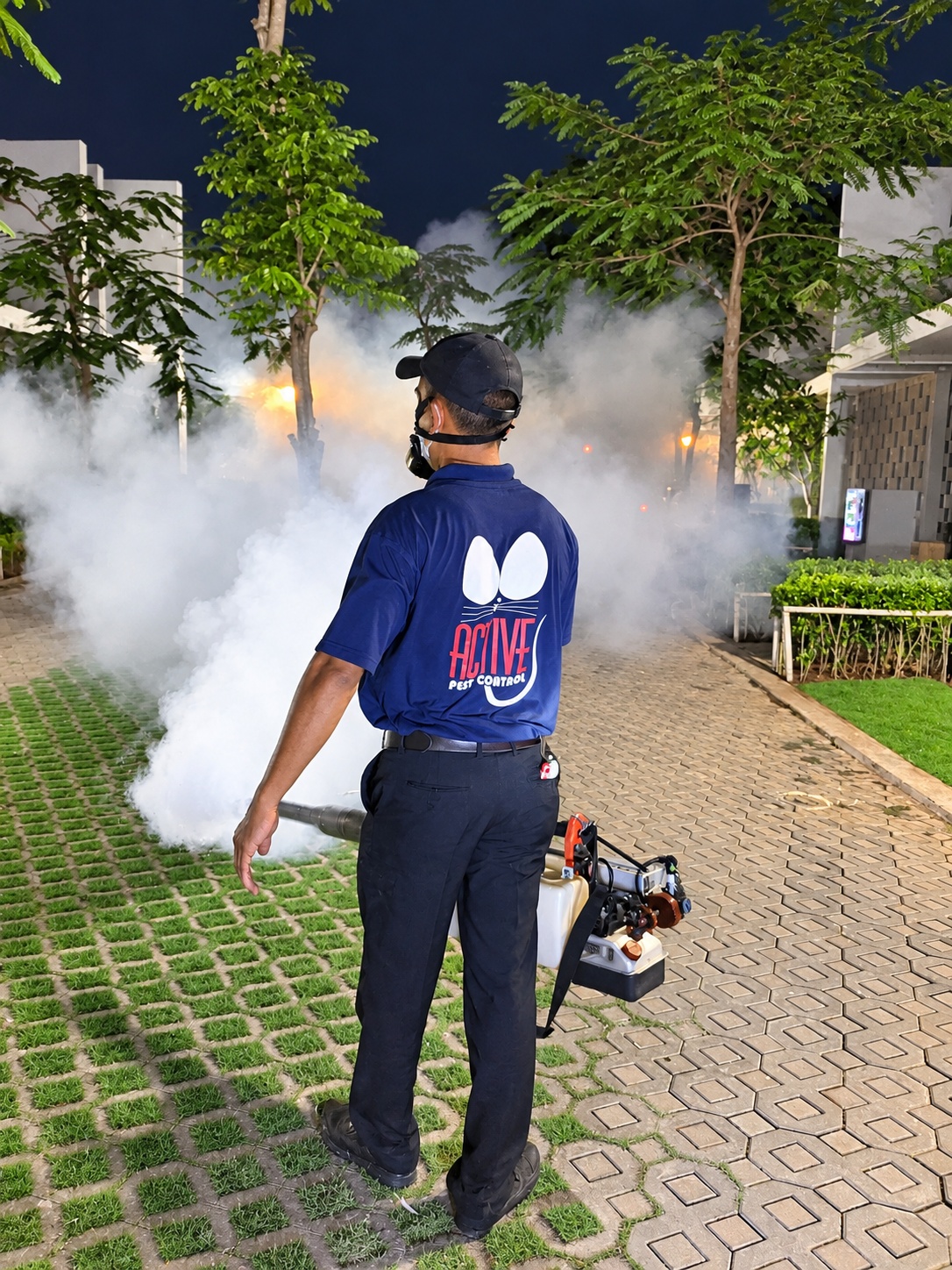
Fogging is a pest control application method that uses specialized equipment to disperse insecticide into the air as a fine mist or dense fog. The small droplets help distribute the treatment across a wide area and reach flying insects as well as pests hiding in difficult-to-access locations.
There are two common fogging methods:
- Thermal Fogging: Uses heat to produce a dense, smoke-like fog, typically for outdoor areas, large spaces, and mosquito control.
- Cold Fogging (ULV): Uses high air pressure to generate very fine droplets without heat, allowing more controlled application in indoor and outdoor areas.
Benefits of Fogging
- Rapid Knockdown: Quickly reduces exposed and flying pest populations.
- Wide Area Coverage: Treats large areas efficiently, including outdoor spaces and hard-to-reach zones.
- Good Penetration: Fine droplets can reach cracks, corners, vegetation, and other areas that may be difficult to treat with conventional spraying.
- Efficient Application: Allows pest control professionals to treat extensive areas in a relatively short time.
- Suitable for Flying Insects: Particularly effective as a space-treatment method for mosquitoes, flies, and other flying pests.
Fogging is generally used as part of an Integrated Pest Management (IPM) program and should be carried out by trained professionals using the appropriate equipment, insecticide, and application rate for the target pest and site.
For fogging pest control enquiries, please contact Active’s hotline 0888 011515.