

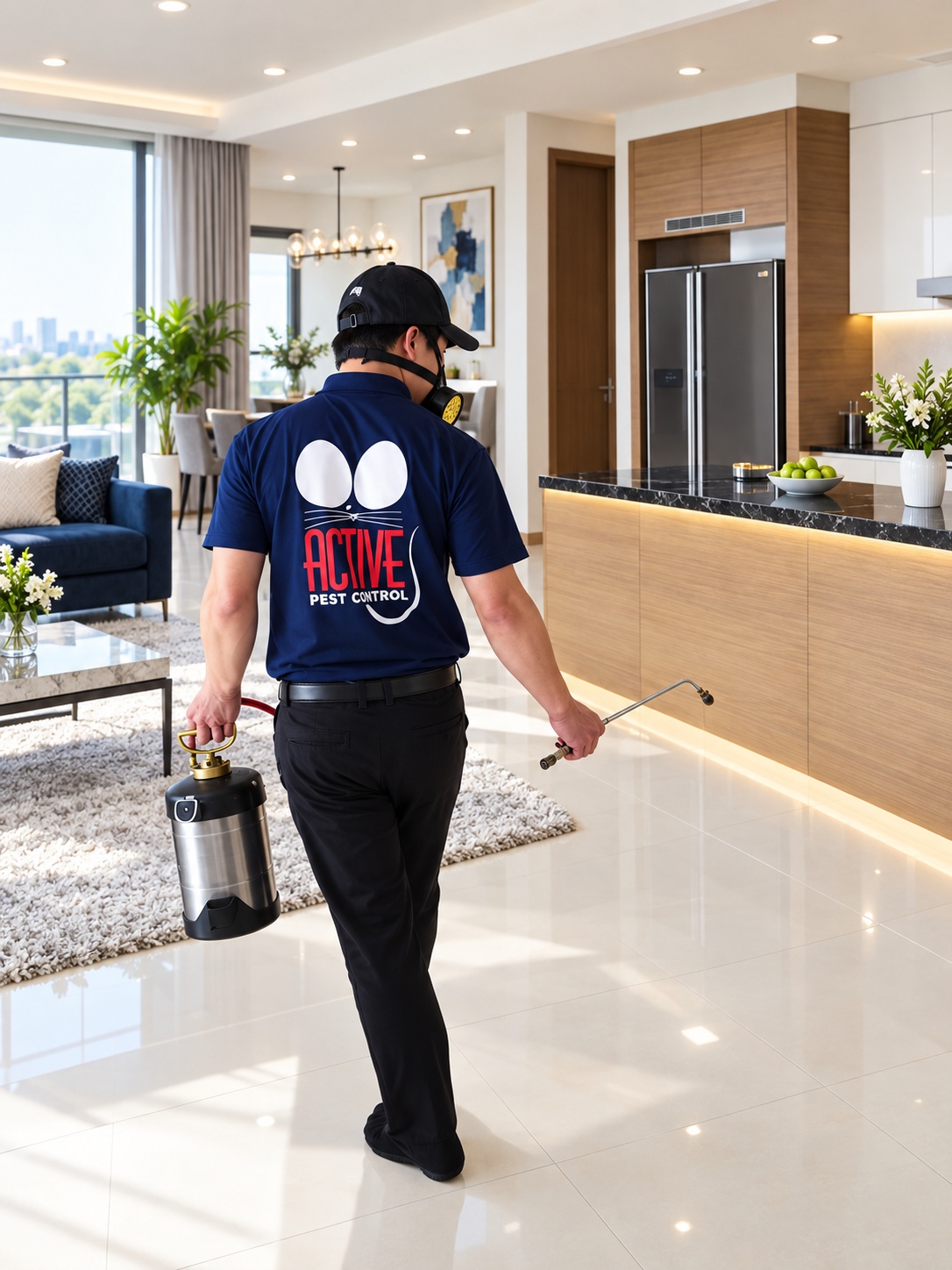
Residual spraying is a professional pest control method in which an insecticide is applied to selected surfaces where pests commonly travel, rest, or hide. After the spray has dried, the active ingredient remains on the treated surface and continues to affect target pests when they come into contact with it.
Unlike space spraying, which provides a short-term knockdown effect, residual spraying is designed to provide longer-lasting protection between treatments.
Key Benefits
- Long-lasting protection: Residual activity continues after application, helping provide ongoing control of target pests.
- Targeted pest control: Treatment can be focused on pest pathways, harborage areas, entry points, and other high-risk locations.
- Effective against a wide range of pests: Common applications include cockroaches, ants, mosquitoes, flies, bed bugs, and other crawling or resting insects.
- Reduced need for frequent applications: When the correct product, formulation, surface, and application rate are selected, residual treatment can provide extended protection.
- Suitable for Integrated Pest Management (IPM): Residual spraying can be combined with sanitation, exclusion, monitoring, and other preventive measures to achieve sustainable pest management.
The duration and effectiveness of residual activity depend on the active ingredient, formulation, surface type, environmental conditions, and quality of application. Professional treatment therefore focuses on applying the right product to the right surface at the correct rate, while minimizing unnecessary pesticide exposure.
Residual Spraying provides a practical balance between effective pest control, lasting protection, and targeted pesticide use.